A Practical Assessment of the Income and Expense Tracker KDP Interior
For entrepreneurs and self-publishers navigating the Kindle Direct Publishing (KDP) platform, finding high-quality, ready-to-use assets can significantly streamline the production process. The Income and Expense Tracker KDP Interior represents one such asset—a complete, formatted template designed for creating a functional financial logbook. This analysis examines its characteristics, practical value, and suitability for different users.
Core Purpose and Immediate Utility
The primary purpose of this Income and Expense Tracker KDP Interior is to serve as a foundational template for a paperback book. It is not a software application but a print-ready document layout. It provides a structured, clean format for recording daily financial transactions, catering to individuals who prefer or require a physical ledger. Its immediate utility lies in removing the design and formatting hurdles from the publishing workflow. A creator can focus on marketing and distribution rather than on designing pages from scratch.
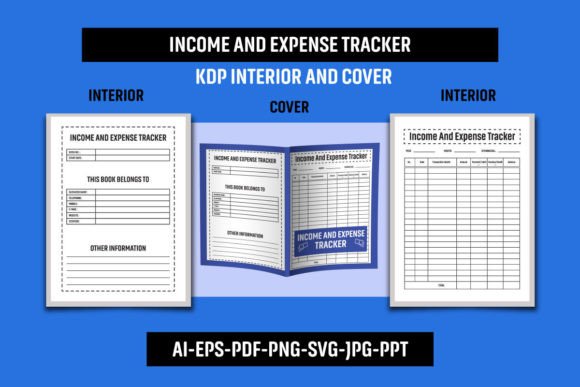
The included files—AI, EPS, PDF, PPT, JPG, PNG, and SVG—indicate a comprehensive package aimed at users with varying technical proficiencies. The PDF files are print-ready, meaning they adhere to KDP’s specifications for bleed and dimensions, a crucial detail that prevents upload errors. The inclusion of editable Illustrator (AI and EPS CS6) files offers significant flexibility for those wishing to customize the layout, while the PPT and image files provide simpler alternatives for minor adjustments.
Evaluating Key Features and Specifications
Examining the provided specifications reveals a product built with attention to technical requirements. The 8.5" x 11" format with bleed is a standard size for many workbooks and logs. The 120-page interior offers ample space for extended tracking, while the black-and-white, double-sided, high-resolution (300 DPI) design ensures professional print quality and cost-effective production.
A notable strength is the provision of both interior and cover files. The cover template, with its left-to-right orientation and overall dimensions of 17.52" x 11.25", is correctly sized for a wrap-around cover, accounting for spine width. This holistic approach means a publisher receives a nearly complete book block, requiring only the insertion of title and author information, and potentially minor branding elements.
Quality and Reliability Considerations
For a template, quality is measured by its adherence to platform standards and its ease of use. Being “100 formatted and tested for upload on KDP” suggests the developer has gone through the upload process to validate the files. This reduces risk for the buyer, as a misformatted interior can lead to rejection or poor print results. The use of standard graphic software formats (Illustrator, EPS) generally implies a vector-based design, which maintains clarity at any scale.
However, the reliability of such a product for an end-user depends partly on their own software access and skills. While the PDF is universally accessible, fully leveraging the editable AI or EPS files requires Adobe Illustrator CS6 or a compatible vector editing program. Users without this software would rely on the PPT or image files for edits, which may offer less precision.
Real-World Performance and Application
In practical use, the Income and Expense Tracker KDP Interior functions as a blank canvas organized for financial data entry. Its simplicity—likely featuring columns for date, description, income, expense, and balance—is its effectiveness. It avoids complex accounting jargon, making it suitable for personal finance, small business cash flow tracking, or home-based business record-keeping.
For a KDP publisher, its performance is twofold. First, it accelerates time-to-market. Second, it ensures a professional baseline product. A user can upload the PDF interior and the adjusted cover, and have a viable physical product ready for sale in a short timeframe. This is particularly valuable for those building a portfolio of niche low-content books or seeking to validate a market with a quick turnaround.
Potential Limitations and User Considerations
The template’s generic nature is both a strength and a limitation. Its broad applicability means it may not serve specialized accounting needs, such as categorizing deductible expenses for tax purposes or tracking inventory alongside finances. Users with such needs would require further customization.
Furthermore, the market for physical income and expense trackers exists, but it is competitive. The success of a book using this interior will depend heavily on the publisher’s ability to create a compelling cover, write an accurate description, and execute effective marketing. The template provides the vessel, not the voyage.
Identifying the Ideal Audience and Use Cases
This Income and Expense Tracker KDP Interior is most beneficial for specific segments of the KDP community and small business operators.
- KDP Newcomers: Individuals starting their self-publishing journey can use this tested template to learn the process with a reduced risk of technical errors.
- Efficiency-Focused Publishers: Experienced publishers looking to expand their catalog quickly can integrate this as a reliable, repeatable asset.
- Freelancers and Small Business Owners: Beyond publishing, the actual logbook can be a useful tool for managing their own business finances. Purchasing the template allows them to print copies for personal use.
- Educators and Workshop Facilitators: Those teaching basic financial literacy or business management might use customized versions of this log as a physical handout for students.
It is less suitable for users seeking a digital solution or a highly automated financial tool. Its value is inherently tied to the physical print book format.
Final Observations on Long-Term Value
The long-term value of the Income and Expense Tracker KDP Interior hinges on its adaptability. The provision of editable source files is key here. A user who invests time in customizing the template—adding sections for project codes, payment methods, or quarterly summaries—can create a differentiated product that stands out in the marketplace. This transforms it from a single-use template into a foundational asset for a series of financial logbooks.
For the serious KDP entrepreneur, such assets contribute to a streamlined, scalable production system. Consistency in interior quality across multiple books builds brand reliability. Therefore, while the initial purchase provides one book layout, its deeper value may lie in serving as a modular component in a larger publishing operation.
In summary, this Income and Expense Tracker KDP Interior is a well-specified, technically sound template that fulfills a clear need. Its worth is practical and immediate, offering a shortcut to a market-ready product. Users should assess their own goals: whether they need a quick-start template for a single book, a customizable asset for a series, or simply a professionally formatted log for personal use. For those aligned with its format and scope, it represents a competent and useful resource.