A Practical Evaluation of Mazes for Kids - 21 for Activity Book Publishers
For anyone involved in creating educational resources or children's activity books, the quality and format of the underlying assets are critical. Mazes for Kids - 21 presents itself as a specific product bundle aimed at streamlining the publishing process. This article examines its distinct features, compares it to typical development approaches, and explores the practical considerations for deciding if it fits a particular project.
Understanding Mazes for Kids - 21: Core Components and Format
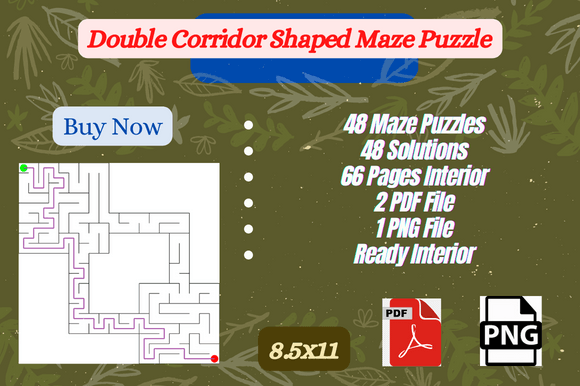
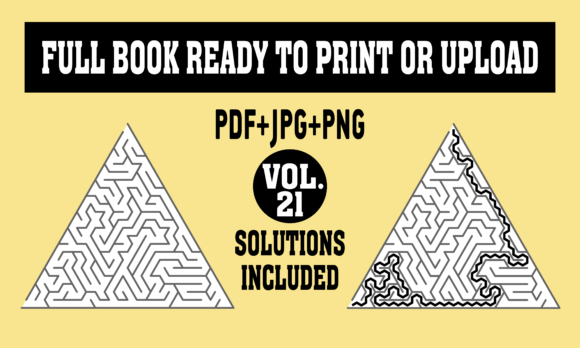
Mazes for Kids - 21 is, fundamentally, a prepared digital asset pack. It is not a physical book, but rather a collection of 21 maze puzzles designed for children, delivered in multiple file formats. The product details clarify its composition: separate PNG and JPG files for both the mazes and their solutions, alongside a consolidated PDF file. This multi-format offering is tailored for digital upload and print readiness, with specific guidance for using it on platforms like Kindle Direct Publishing (KDP) with an 8.5" x 11" trim size and "No Bleed" settings.
What makes this product distinct from a generic collection of mazes is its pre-packaged, commercial-ready structure. Instead of a single file or a haphazard collection, it provides organized, separate assets. This structure addresses a common pain point for creators: the need to manually separate puzzles from answer keys and convert files into suitable formats for different publishing requirements.
Comparing Development Paths: Custom Creation Versus Pre-Packaged Assets
When considering resources for a children's activity book, creators typically weigh two main paths. The first is custom creation, where mazes are individually designed, drawn, and formatted. This approach offers maximum control over theme, difficulty progression, and artistic style. The second path involves utilizing pre-existing assets, like Mazes for Kids - 21, which sacrifices some customization for efficiency and a lower upfront time investment.
The tradeoffs here are significant. Custom creation allows for a unique product that can align perfectly with a specific brand or educational goal. However, it requires graphic design skills, time for creation, and additional effort for file preparation and formatting. Mazes for Kids - 21, as a pre-packaged solution, eliminates the design and initial formatting stages. The limitation, clearly, is in the fixed content: you receive 21 specific mazes. There is no ability to alter their design, change their themes, or adjust their complexity sequence.
File Format Flexibility as a Key Decision Factor
A notable strength of Mazes for Kids - 21 lies in its provision of multiple file types. The inclusion of separate PNG and JPG files for both mazes and solutions is a practical feature often overlooked in simpler bundles. PNG files, with their support for transparency, can be advantageous if a creator wishes to overlay mazes on different backgrounds or integrate them into more complex layouts. JPG files offer a smaller, more universally compatible format. The bundled PDF provides a straightforward, print-optimized version ready for immediate upload or local printing.
Compared to receiving only a PDF, this multi-format approach offers greater flexibility for downstream use. For instance, a creator might use the individual PNG files to build a digital app or interactive ebook, while using the PDF for a physical print edition. This versatility can be a deciding factor for projects that span multiple media formats. However, if a project is solely a standard print book uploaded to KDP, the PDF alone might suffice, making the extra formats a nice bonus rather than a necessity.
Evaluating Fit for Publishing Platforms and Print Specifications
The product guidance specifically mentions KDP upload with options for 8.5" x 11" and "No Bleed." This indicates Mazes for Kids - 21 is optimized for a common trim size in the educational and activity book market, particularly in the United States. The "No Bleed" setting means the artwork does not extend to the edges of the page, which simplifies printing and reduces the risk of cropping issues on consumer-grade printers. This makes the product a potentially good fit for home-based publishers or small businesses targeting the KDP platform.
When comparing to the requirements of other publishing avenues, this specificity presents both a benefit and a constraint. For platforms adhering to similar standards, it's a seamless fit. However, for projects requiring European A4 sizing, bleed for professional offset printing, or integration into a book with a different interior layout, Mazes for Kids - 21 would require reformatting. The provided PNG/JPG files could facilitate this reformatting work, but it adds an extra step. In contrast, a completely custom project would be designed from the outset to meet those alternative specifications.
Considering the Educational Value and Age Appropriateness
While the product name suggests an audience of kids, the actual complexity and design of the 21 mazes are not detailed in the provided specifications. This is a crucial area for comparison. Potential users must evaluate whether the mazes' difficulty, visual appeal, and educational value align with their target age group—which could range from preschoolers to early elementary students.
Mazes for Kids - 21 might be an excellent choice if the mazes are well-designed for a broad age range or if the creator is supplementing them with other material. However, if the project demands mazes with a specific educational trajectory—for example, mazes that gradually introduce coordinate concepts or letter shapes—a generic pre-packaged set may not satisfy that need. In such cases, a tailored creation or a more specialized asset pack focused on, say, "math mazes" or "alphabet mazes" might be a better alternative.
When Mazes for Kids - 21 Is the Right Choice
This asset pack fits most naturally in situations where time efficiency and format readiness are prioritized over unique customization. Ideal use cases include:
- A publisher looking to quickly expand an existing activity series with a supplemental maze section.
- A new KDP publisher seeking a tested, correctly formatted product to understand the upload and printing process.
- A creator producing a multi-format product (e.g., both print and digital) who values the separate PNG/JPG files for digital adaptation.
- An educator or small business needing a batch of mazes for a single, straightforward print project like a weekend activity pack or a camp booklet.
In these scenarios, the upfront savings in design and formatting time can outweigh the limitation of fixed content. The product acts as a reliable, plug-and-play component.
When to Consider Alternatives to Mazes for Kids - 21
There are several situations where Mazes for Kids - 21 might not be the optimal resource. Decision factors that would lead one to explore other options include:
- Need for Brand Consistency: If the mazes must match a specific cartoon style, color palette, or character set used across other materials, custom design is unavoidable.
- Specialized Educational Goals: Projects focused on teaching a particular skill (like fine motor control for toddlers or logical reasoning for older kids) may require mazes with carefully calibrated difficulty and thematic elements.
- Unusual Print or Digital Specifications: Projects requiring bleed, custom page sizes, or intricate digital interactivity beyond simple image placement might find the pre-set formats limiting.
- Scalability Requirements: If the plan is to produce a series with hundreds of unique mazes, investing in a custom design template or hiring an illustrator could be more cost-effective long-term than purchasing multiple, small pre-packaged sets.
Balancing Cost, Time, and Control in Your Decision
The ultimate choice between using Mazes for Kids - 21 or another approach hinges on a balance of three factors: cost, time, and creative control. Pre-packaged assets typically represent a lower initial cost and faster deployment. They offer moderate control—you control the surrounding book layout and how the assets are presented, but not the assets themselves. Custom creation involves higher initial cost (either in money for a designer or in your own time) and slower deployment, but grants full control.
For many independent publishers and educators, Mazes for Kids - 21 sits in a useful middle ground. It provides enough control via its multiple file formats to adapt the assets into a larger project, while significantly reducing the time and skill barrier associated with creating the core maze artwork from scratch. By understanding its specific format offerings, its optimization for common publishing channels, and its inherent tradeoffs, you can make a more informed decision about whether it serves as a helpful component in your resource creation toolkit or if your project demands a different path altogether.