Craft Valentine Themes Easily with Pastel Heart Cover Templates
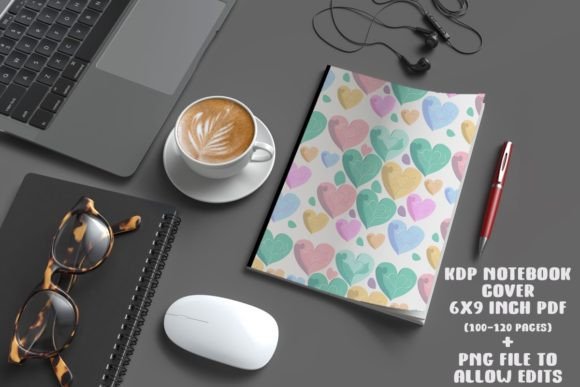
For anyone publishing on Amazon's Kindle Direct Publishing platform, a book cover is not just packaging; it's the first and most crucial piece of marketing. The KDP Valentine Pastel Heart Book Cover template is a resource designed to meet that need specifically for romance, journals, poetry, or any project with a gentle, affectionate theme. It consists of a seamless pattern of delicate pastel hearts, provided as a ready-to-use PDF and an editable PNG file. This dual format approach is the core of its utility, bridging the gap between quick deployment and creative customization.
Why a Simple Template Matters to Different Creators
At first glance, a pre-made book cover template might seem like a minor tool. But its significance changes dramatically depending on who is using it and what they aim to achieve. For a busy entrepreneur launching a series of Valentine-themed journals, it's a time-saving asset that ensures brand consistency. For a hobbyist writing their first romance novella, it's a confidence-building solution that bypasses the intimidation of complex design software. The value isn't just in the pretty hearts; it's in the flexibility of the accompanying PNG file, which allows you to change the background color, erase elements, or integrate your own text and imagery.
This means a blogger creating a gift guide can adapt it to match their website's palette, while an educator putting together a student writing project can keep it simple and clear. The priorities shift: from commercial efficiency and professional presentation for one user, to learning value and creative exploration for another. The same asset serves both purposes without forcing either into a compromise.
Practical Pathways for Beginners and Seasoned Professionals
If you're new to KDP or design, the prospect of creating a cover that meets Amazon's technical specifications can be daunting. The ready-to-use PDF format of the KDP Valentine Pastel Heart Book Cover template eliminates that hurdle. You download it, ensure your title and author name are correctly placed, and upload it. It's a reliable, speed-focused solution. The learning value here is indirect but important; you successfully publish a book with a professional-looking cover, which builds your understanding of the process without the initial stress of graphic design.
An experienced publisher or marketer, however, will look straight at the PNG file. Their priority is flexibility and brand alignment. They might use the seamless heart pattern as a background layer, then completely change its color to a soft mint or lavender that fits their established brand identity for a series of composition notebooks. They could erase clusters of hearts to make space for a striking author logo or a subtitle. For them, the template is a high-quality, modifiable starting block that accelerates the creation process while still allowing for sophisticated customization. It offers long-term usefulness as a reusable asset for seasonal promotions.
Aligning the Template with Your Specific Project Goals
How do you know if this particular template is right for your project? Start by asking what you need most from a cover design resource.
Are you a freelancer designing a cover for a client's Valentine-themed journal? Your needs center on quality, professional presentation, and the ability to tweak the design to match the client's vague request for "something sweet and modern." The editable PNG allows you to do that quickly, making the service more profitable for you.
Is your primary goal as a small business owner to produce a line of low-content books (like planners or logbooks) for a Valentine's Day product launch? Your priorities are cost-effectiveness, speed, and reliability. Using the PDF ensures every cover in the line is identical and technically correct, saving you hours of individual file checking.
For a consumer or hobbyist who is writing a personal love poem collection for friends and family, the priorities might be creativity and ease of use. You want the final book to feel personal and beautiful, but you don't want to spend weeks learning Illustrator. The PNG file lets you choose a background color that feels uniquely yours—perhaps the exact shade of a favorite sweater—and add a handwritten-style title, making the cover feel intimately crafted.
The Understated Power of the Editable PNG File
The inclusion of an editable PNG file is what transforms this from a static template into a dynamic design tool. A PNG with a transparent or separable pattern means you are not locked into the initial visual. This matters differently across audiences:
- For creators and bloggers: It allows for integration. You can place the heart pattern over a photograph of handwritten notes or a bouquet, creating a richer, layered composition for a special edition journal cover.
- For educators and workshop leaders: It enables simplification. You can erase most of the hearts to create a cleaner, more minimal background for a student anthology title, focusing attention on the words.
- For professionals and entrepreneurs: It guarantees adaptability. If your brand colors change next year, or you want to repurpose the design for a "Spring Love" theme, you can alter the pastels to suit without recreating the entire pattern.
This aspect speaks directly to the principle of long-term usefulness. A template you can modify is a template you can use again, adapting it to future projects and evolving creative outlooks.
Making the Decision: Does This Match Your Needs?
Evaluating the KDP Valentine Pastel Heart Book Cover template comes down to your skill level, time constraints, and desired outcome. If your goal is to publish a single, beautifully themed book with minimal fuss and zero design learning, the PDF format is your direct path. The quality is assured, the presentation is professionally gentle, and the process is reliable.
If your goals involve customization, brand consistency, or creative experimentation—even as a beginner willing to learn a little—then the PNG file is your key. It requires a basic understanding of how to use layers in a simple design program like Canva or even a free image editor, but the learning curve is shallow. The payoff is a cover that feels truly yours, potentially increasing the commercial value and personal satisfaction of your project.
Ultimately, this template serves as a bridge. It connects the need for aesthetic quality with the practical realities of time, skill, and resource. Whether you see it as a finished product or a starting point depends entirely on your perspective as a creator, business owner, or individual bringing a heartfelt project into the world.