The Essential Guide to a Child Medical Record Logbook
For parents and caregivers, safeguarding a child's health is a primary, ongoing responsibility. From routine vaccinations to unexpected illnesses, managing medical information can become a complex task. Paperwork gets scattered, dates are forgotten, and critical details from different providers become difficult to consolidate. This is where a dedicated Child Medical Record Logbook transforms from a simple notebook into a vital family health management tool.
Understanding the Core Purpose of a Medical Logbook
A Child Medical Record Logbook is a systematically designed journal used to compile, track, and organize all health-related information for a child. It serves as a centralized, physical repository that goes beyond the standard vaccination card. Think of it as your child's personalized health archive, created and maintained by you. Its primary purpose is to give caregivers a clear, chronological, and complete overview of the child's medical history, empowering them to make informed decisions and communicate effectively with healthcare professionals.
Common Challenges in Managing Child Health Information
Without a structured system, parents often face several practical difficulties. Important documents like discharge summaries, specialist reports, and allergy test results end up in different folders or drawers. During a busy doctor's visit, recalling the exact date of a previous illness or the dosage of a prescribed medication can be stressful and inaccurate. For children with chronic conditions or those seeing multiple specialists, coordinating information between providers becomes crucial. Furthermore, in emergency situations, having instant access to a consolidated record can be invaluable. The challenge is not just storing information, but organizing it in a way that is instantly useful and accessible.
How a Logbook Addresses These Real-World Situations
A well-designed Child Medical Record Logbook directly mitigates these challenges by providing a single, dedicated location for all data. It turns fragmented information into a coherent story. For instance, during a wellness checkup, you can quickly present a complete history of growth measurements, vaccinations, and past ailments, enabling a more productive conversation with the pediatrician. For a child with asthma, the logbook can track symptom patterns, medication adjustments, and triggers observed at home, providing concrete data that helps in managing the condition. It also becomes a legal document of record, useful for school enrollments, sports physicals, or travel requirements where detailed health history is needed.
Practical Applications and Tangible Outcomes
The utility of a Child Medical Record Logbook shines in daily application. Consider these practical outcomes:
- Improved Healthcare Coordination: You can note questions for the next appointment, log side effects of medications, and record follow-up instructions, ensuring nothing is overlooked.
- Enhanced Confidence and Preparedness: Carrying the logbook to appointments reduces anxiety. You have the facts at hand, which fosters a more collaborative partnership with your child's doctor.
- Development Tracking: Beyond illness, many logbooks include sections for milestones, dental records, and vision checks, offering a holistic view of the child's development.
- Time and Stress Reduction: Eliminating frantic searches for paperwork saves time and mental energy, especially when managing the health needs of multiple children.
Tailoring the Logbook to Different User Needs
Different caregivers will utilize a Child Medical Record Logbook in ways that suit their specific situation. A new parent might focus meticulously on vaccination schedules and feeding issues. A parent of a child with special medical needs might use it to document complex medication regimens, therapy sessions, and communications between a team of specialists. Foster parents or guardians might find it essential for maintaining continuity of care and providing historical context to new providers. Even grandparents providing occasional care can benefit from a clear logbook to understand the child's current health status and routines. The logbook is adaptable; its value is defined by the user's unique requirements.
Choosing and Implementing Your Child Medical Record Logbook
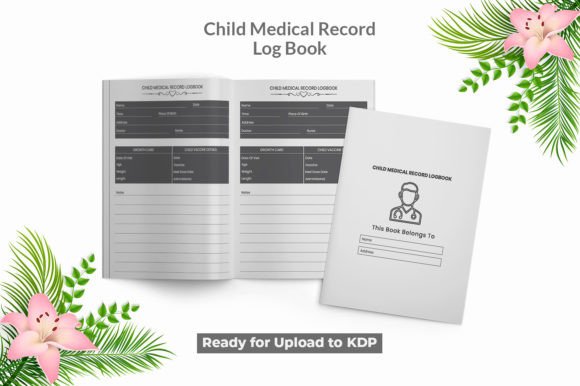
When selecting a logbook, consider design features that match your workflow. Look for a logical layout with clearly labeled sections for immunizations, illnesses, doctor visits, medications, hospitalizations, and allergies. Additional pages for emergency contacts, insurance information, and a family health history are highly useful. The physical format matters too; a logbook designed for KDP (Kindle Direct Publishing) with tested interiors, offered in practical sizes like 8.5x11 or portable 6x9 inches, and containing 120 pages provides ample space for years of records. High-quality 300 DPI PDF and JPG files ensure the design is crisp and professional if you choose to print it yourself.
Recommendations for Effective Use
To maximize the benefit, start the logbook as early as possible, even from the first newborn visit. Be consistent in your entries, noting the date, provider name, diagnosis, prescribed treatment, and any observations. Use it not just as a passive record, but as an active tool—write down questions as they arise at home. Keep it in a known, accessible place, perhaps with your child's other important documents. Remember, its accuracy depends on your input; update it promptly after every medical encounter. Over time, this compiled history will reveal patterns and provide an unparalleled insight into your child's health journey, proving that this simple organizational tool is, in fact, a powerful instrument for proactive care.
A Final Consideration: The Value of a Personal Health Archive
In an age of digital records, a physical Child Medical Record Logbook offers a tangible, parent-controlled complement. It doesn't replace official electronic medical records but personalizes and simplifies them for daily use. It empowers you as the primary caregiver, ensuring you are never reliant on memory alone. By investing a small amount of time in maintenance, you gain immense clarity, control, and peace of mind. Ultimately, it is more than a log; it is a curated history of your child's wellbeing, a resource that supports their health today and informs their care tomorrow.