The Grounding Journal: A Practical Path to Present-Moment Connection
In a world of digital noise, relentless productivity pressures, and escalating anxiety, a profound shift is underway. More people are seeking meaningful, actionable ways to step away from the internal chatter and the external chaos to reconnect with a sense of stability. This isn't about an abstract spiritual quest; it's a practical response to the demands of modern life. For professionals managing burnout, creators facing blocks, entrepreneurs under constant stress, and anyone navigating the complexities of contemporary existence, the need for tangible tools to cultivate calm is paramount. The Grounding Journal with Prompts emerges directly from this need, offering a comprehensive and accessible framework designed to transform a concept into a daily practice.
The Modern Necessity of Grounding
Grounding, or the practice of anchoring oneself in the present moment, has evolved from a niche therapeutic technique to a mainstream wellness imperative. This evolution is fueled by clear, observable trends: the recognition of mental health as a cornerstone of performance, the rise of holistic self-care integrated into professional workflows, and a growing disillusionment with quick-fix solutions. People are paying more attention because the evidence, both scientific and anecdotal, is compelling. Consistent grounding practice correlates with reduced cortisol levels, improved focus, better emotional regulation, and a heightened sense of personal agency. It’s not merely a trend; it's a recalibration of how we manage our internal resources amidst external uncertainty.
The Grounding Journal with Prompts serves as a dedicated guide for this recalibration. It translates the broad, sometimes vague, concept of "being present" into a structured, multi-faceted approach. For the user, this means moving beyond theory into application. Instead of wondering how to start, the journal provides the map.
Deconstructing Anxiety: How the Journal Functions
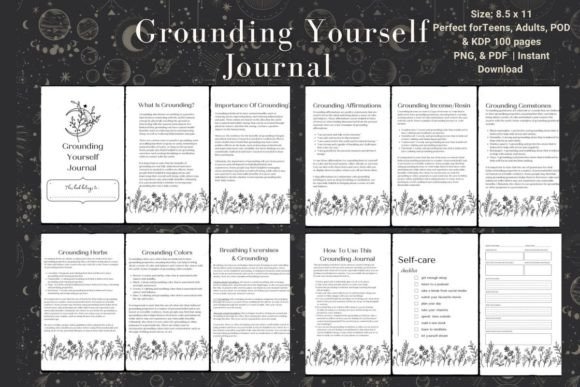
Anxiety and disconnection often stem from a feeling of being scattered—thoughts, emotions, and attention flying in multiple directions without a center. The journal's first practical implication is to counteract this scattering through sequential, guided engagement. It begins with a clear "How To Use" section, eliminating the initial friction that often halts new practices. This step-by-step instruction is crucial for busy adults; it respects their time and cognitive load, ensuring the tool can be integrated efficiently.
Following this, the journal establishes a solid foundation with its "What Is Grounding" explanation. This isn't a philosophical treatise but a concise, reason-driven overview. It answers the "why" before the "how," creating intellectual buy-in, which is particularly important for professionals and analytical thinkers who value understanding the mechanism behind a practice.
The Tangible Benefits: A Closer Look at Importance
The "Importity of Grounding" section delves into the specific, realistic benefits. For the entrepreneur, this might mean enhanced decision-making clarity under pressure. For the freelancer, it could translate to sustained creativity and reduced project anxiety. For any individual, the physical health improvements—such as mitigating the physiological symptoms of chronic stress—are a key motivator. This section moves the conversation from "feeling better" to "functioning better," aligning grounding with tangible outcomes in work, relationships, and personal health.
A Multi-Sensory Toolkit for Anchoring
What sets this journal apart is its holistic recognition that grounding is not a single-action event but a state cultivated through multiple channels. Our minds and bodies respond to varied stimuli, and the journal provides a toolkit addressing this diversity:
- Cognitive Anchors (Affirmations): The Grounding Affirmations are curated prompts to redirect thought patterns. For example, a prompt like "I am firmly supported in this moment" can directly counter a feeling of instability during a challenging workday.
- Environmental Cues (Incense & Gemstones): The specifically chosen Grounding Incense and Grounding Gemstones recommendations use scent and tactile focus as triggers. Lighting a recommended incense or holding a listed gemstone becomes a ritualistic signal to the nervous system to shift into a calmer state.
- Natural Integration (Herbs): The Grounding Herbs section invites practice into daily routines like drinking tea or taking a bath. Suggesting chamomile for a pre-bed tea or lavender for a bath integrates grounding into self-care without requiring extra "practice time."
- Visual Calm (Colors): Grounding Colors recommendations offer a subtle yet powerful way to influence mood. Choosing to wear earthy tones or incorporating calming blues into a workspace decor is a simple, constant visual reminder of balance.
- Physiological Regulation (Breathing): The Grounding Breathing Exercises are the most direct physiological intervention. Simple techniques, like a counted breath cycle, provide an immediate method to lower heart rate and anchor attention in the body, useful in moments of acute stress or before a important meeting.
Integrating Grounding into Contemporary Life
The practical implication of this multi-sensory approach is personalization. A creator might find the affirmations and breathing exercises most relevant during a brainstorming session. A business owner might prioritize the environmental cues and color theory to create a calmer office atmosphere. An educator might use the herbal knowledge to prepare a calming tea after a demanding day. The journal doesn't prescribe a single path; it offers a spectrum of modalities, allowing the user to build a personalized grounding protocol that fits their unique lifestyle and sensitivities.
This reflects a key shift in modern wellness: the move away from generic prescriptions towards adaptable, user-defined systems. The journal acts as a sourcebook, empowering the individual to experiment and discover which combinations of prompts, sensory inputs, and exercises yield the most centering effect for them.
From Practice to Habit: The Role of Structure
For any new practice to stick, especially among adults with established routines, structure is essential. The Grounding Journal with Prompts provides this through its organized sections. The prompts within the journal serve as daily or weekly points of engagement, preventing the practice from becoming amorphous or forgotten. This structured yet flexible format aligns perfectly with contemporary habit-formation science, which emphasizes clear triggers and easy entry points.
The Broader Context: Grounding as Foundational Self-Care
The final sections of the journal, extending into Self Care, position grounding not as an isolated activity but as the foundational layer of a holistic self-care regimen. When one is grounded and present, other self-care practices—whether exercise, nutrition, or relationship building—are undertaken with greater awareness and intention. For the professional, this means self-care becomes strategic, enhancing resilience rather than being merely reactive. For the creative, it means accessing a clearer channel for inspiration. The journal, therefore, offers more than a set of techniques; it proposes a mindset where being centered is the prerequisite for effective action and sustainable well-being.
In essence, the relevance of the Grounding Journal with Prompts lies in its response to a clear, widespread need for a pragmatic, non-esoteric, and comprehensive tool. It meets the user expectation for actionable content over vague advice. It fits into business needs by addressing the root of burnout and decision fatigue. It supports creative practices by clearing mental blockages. And it serves everyday readers by providing a concrete way to navigate the anxiety of modern life. By combining explanation, evidence, and a diverse toolkit, it transforms the ancient wisdom of presence into a modern, accessible practice for anyone seeking to feel more centered, connected, and capable in their daily life.